
Home » PCB Assembly » Printed Circuit Board Assembly Conformal Coatings
PCB Assembly
Discover how conformal coatings safeguard PCB assemblies from moisture, dust, chemicals, and thermal shock. Learn about coating types, application methods, and industry standards
Generally, the assembled printed circuit board required a conformal coating finishing only when they are used in some mission-critical applications, such as aerospace, automotive, medical, military, etc. Nowadays, increasing demand in wearable electronics has lead to a higher requirement to the protection and reliability offered by conformal coating (the sweat will take problem between PCB and electricity).
Conformal coating is a specially protective polymeric film-forming material that protect printed circuit boards and electronic assemblies from harmful environmental impact such as moisture, corrosion, static, thermal shock, vibration, and even contamination. The coating formed as a thin film that “conform” to the contours of PCB and it’s components providing increased dielectric resistance, operational integrity, and reliability.

Generally, conformal coatings are made of a polymeric material such as resin, sometimes mixtured with one or more solvents to enable the material to dispense and flow properly.
The best type of coating material to choose is subject to the exact protection requirement for electronic device and the specific environment that the electronic board will be located. Additionally, some important factors need be considered such as method of application, ease of repair and rework, etc.
086 (0755) 2828 2776
Don’t hesitate, contact us to start discussing your projects. We prioritize your inquiries and aim to respond within 12 hours.
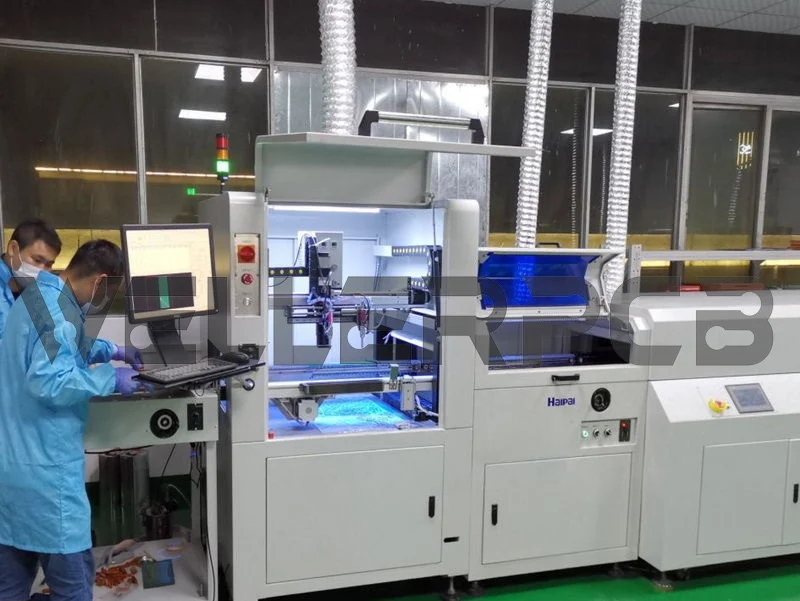
Typically, conformal coatings are 1-part systems with a resin base, and maybe diluted with either chemical solvent or water in rare cases. As these coatings are semi-permeable, therefore they do not fully have water-proof or seal the coated electronic devices. The purpose of the coatings is to provide environmental and mechanical protection to significantly improve the durability, longevity and reliability of the electronic devices, and it is friendly to apply and repair.
Coatings can be categorized by their base resin:
086 (0755) 2828 2776
The best results for you
Don’t hesitate, contact us to start discussing your projects. We prioritize your inquiries and aim to respond within 12 hours.
Today, more and more complex electronics have to be exposed to harsh environments, so it is vital to have a necessary protection to ensure their normal function, durability, reliability, and longevity.
Conformal coatings can provide proven protection against salt sprays, moisture, solvents and aggressive chemicals. What’s more, it is proved that a suitably chosen coating material can help reduce the effects of vibrations and mechanical stress on the electronic circuit board and its performance in serious temperature ranges. Conformal coatings are widely used in the electronic filed to protect the product, as well as enhance the reliability.
Therefore, it diminish the destructive impact of early field failure and also reduces potential costs.
Whether or not a coating needed to your electronic devices depending on the exact environment that the electronics will be used in, the sensitivity of the electronics, the durability and reliability required. Generally, the electronic devices manufactured and assembled by IPC class 3 are more likely to be coated due to their critical nature.
Also, the increasing developing in miniaturization electronics and wearable electronics has raised up a higher demand for extra protection and reliability offered by conformal coating.
Generally, the following factors should be considered when creating a conformal coating application process:
Common application methods for conformal coatings:
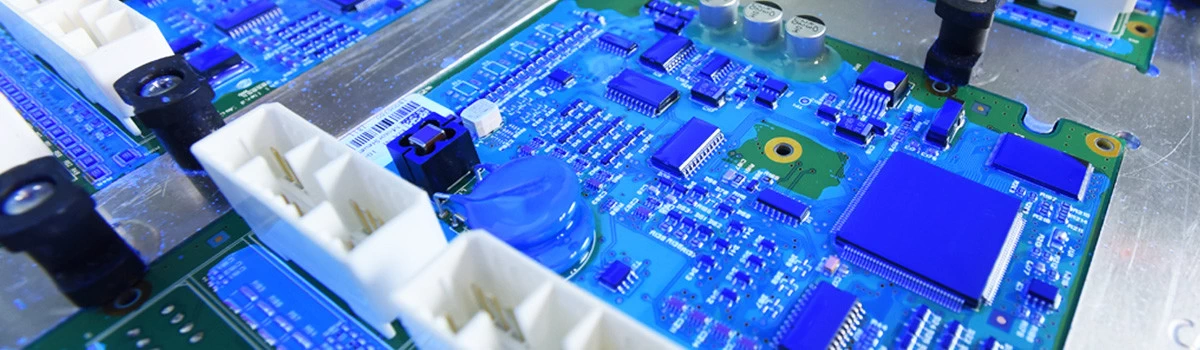
Typically conformal coatings can provide a moisture resistant layer of protection, but cannot be considered waterproof. As coatings are semi-permeable, so they can not fully seal the coated electronics or fully water-proof.
They protect the electronics device from environmental exposure, improving the durability and reliability, and being friendly apply and repair.
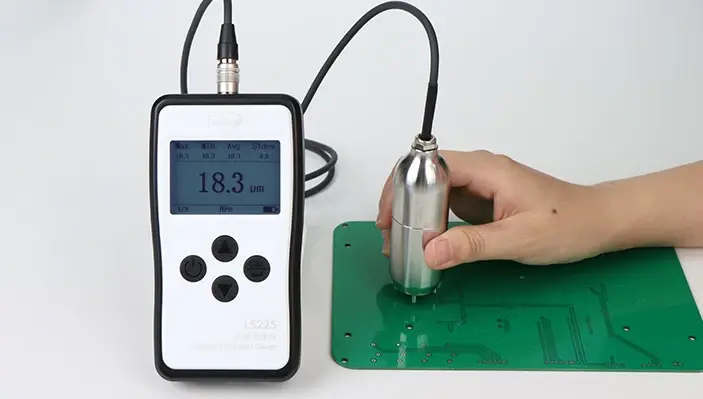
The thicker the protective coating is not the better. Conversely, thinner coating provides the best production possible but minimizes other issues like heat entrapment, excess weight, etc. The typical conformal coating thickness is between 25-127um (1 to 5mils).
Generally, there are 4 ways to measure a conformal coating thickness:
The exact time that the conformal coating can dry depends on the type of the resin, curing method, and the thickness of the coating, differently from seconds to days. Depending on the type of the resin chosen, several types of curing mechanisms are available:
086 (0755) 2828 2776
Don’t hesitate, contact us to start discussing your projects. We prioritize your inquiries and aim to respond within 12 hours.
While there is a repair or rework on coated PCB, you may be required to remove a conformal coating from the printed circuit board to perform the related procedures. Generally, the methods and materials used to remove coatings are determined by the type of coating resins and the size of the coating area, and can impact the time required. The basic methods as specified by IPC are:

Certifications are used to specify conformal coatings from general-purpose varnishes and shellacs. There are several categories of user and industry specifications, but the two major certifications are most commonly referenced: but there are two major certifications most commonly referenced:
086 (0755) 2828 2776
IPC-CC-830 revision B is a civilian version conformal coating qualification standard, the previous standard is MIL-I-46058C,which was inactive in November 1998. IPC-CC-830B is a battery of tests that includes appearance, UV fluorescence, insulation resistance, fungus resistance, flexibility, flammability, moisture and insulation resistance, thermal shock, and hydrolytic stability,and mostly used by board fabricators, OEM design engineers, and coatings suppliers.
Underwriters Laboratories (UL) is officially considered a reliable and credible safety certification body worldwide, and UL certification is a common requirement for consumer goods throughout the world. UL746E testing for both the flammable safety and electrical safety of coated electronic devices. For electrical safety, there is a series of testing similar to IPC-CC-830B, but with a cycling current loading to constantly measure the failure of the isolative properties of the coatings, so as to evaluate whether a conformal coating can withstand sudden electrical surges and maintain its dielectric integrity. The flammability testing uses the UL 94 standard like IPC-CC-830B, which involves attempting to light the cured coating with an open flame, then observing the sustainability of the flame.
Once a conformal coating has passed UL746E, it can be registered with UL and get a registration number. Products certified and registered to UL746E standards can include the UL symbol (which looks like a backward “UR”). To maintain the registration, a coating must be retested annually.
De-wetting happens when a liquid conformal coating do not evenly coat the surface of circuit board . Particular areas of the coatings may bead up while other area appear correctly coated. De-wetting usually occurs because of non-ionic contamination, commonly from the manufacturing, handling or transport process.
When contaminants left on the substrate are incompatible with the coating, it will lead the surface to resist spreading in those contaminated areas. Generally, the conformal coating will bead up and move away from the below contaminants:
Process oils
Flux residues
Mold-release
Fingerprints
Whether contamination come up on the substrate during PCB assembly or are introduced during soldering process, all must be thoroughly removed with careful cleaning. The best way to avoid de-wetting is to ensure the substrate material is spotless prior to apply the conformal coating. Select low-residue materials to control the process more effectively.
De-lamination occurs when a conformal coating lifts away from the substrate, and the area below it will be exposed. Loss of adhesion between the conformal coating and the substrate can cause coating partial or complete lifting. In most cases, de-lamination can not be immediately observed and just noticed when the parts put in use. That’s why prevention beforehand is vital for this defect.
De-lamination most caused by following incentives:
Contaminants existing on the surface of the laminate
Lack of compatibility between the coating and the substrate material
Coating applied too thick to the substrate
Moisture between the coating and the substrate
Improper curing of the conformal coating
Insufficient drying time between coats
To help prevent de-lamination:
Thoroughly clean the board before coating it
Choose a different coating material
Reduce the coating thickness
Reduce force drying
Choose a less permeable coating material
Allow adequate time between coats
Apply a “primer” material known to bond with the substrate and the conformal coating material.
Air could be probably introduced into the coating when you mix or form the spray system. Any other coating method like brushing can also take air bubbles into the coating when there is insufficient tack time between coats.
Common causes of bubbles are:
Coating applied with incorrect equipment settings or pressure
Contaminants on the surface of the substrate
Coating applied too thick to the substrate
High viscosity of the coating material
High temperature during curing
Coating cured too quickly
To help avoid these problems:
Use a lower viscosity version of the conformal coating
Ensure the coating is applied only to the recommended thickness
Apply several thin coats, allowing bubbles to dissipate between layers
Blend coats applied with a brush so they flow easily into all areas of the substrate.
Most of the bubbles are caused by trapped solvent, which evaporating through the coating layers. If the coating thickness is too thick, or if the coating is cured too quickly, the coating surface will skin over while there is still solvent underneath that is vaporizing up, bubbles caused in the top layer.
Small circular zone, highlighted by a “crater” in the center, which usually come up during spray application or shortly thereafter. Generally, this can be caused by water or entrained oil in the sprayer air system and is commonly seen when using shop air. Prevention comes in the form of a well-maintained filtration system to scrub any moisture or oil from entering the sprayer.
Orange peel occurs when the coating is textured or uneven, often appearing dull and looks like the skin of an orange. Mottled textures in the conformal coating may be just an cosmetic issue and non-critical. However, they usually imply a process flaw that must be corrected.
There can be multiple causes for orange peel:
High viscosity of the coating material from incorrect thinners
Low air pressure leading to uneven atomization
Improper application of the coating materials
Insufficient coating applied to the substrate
Coating applied too thick to the substrate
Not enough time curing
To mitigate the effect of orange peel:
Optimize the spraying technique to manufacturer specifications
Choose a different thinner to reduce the viscosity
Apply the coating to the recommended thickness
Increase the “flash-off time” for the solvents to evaporate before turning up the temperature to speed the curing process
Cracking usually occurs when a smooth surface of coating fractures into segments. The cracks between the segments leave the area below exposed to potential contaminants. Because there exists a higher risk of water, moisture, and debris reaching the board level, cracking could lead to other conformal coating failures.
Common causes for cracking are:
Coating applied too thick to the substrate
Insufficient curing time between coats
Too high temperature during curing
Too quickly coating curing
Operating temperature too high or too low
To prevent cracking:
Lower the curing temperature
Allow additional drying time at room temperature
Apply the coating to specified thickness levels
Choose a coating with a wider effective temperature range
Choose a more flexible coating
Generally, a staged evaporation rate is ideal to prevent the cracking. Use a lower cure temperature over a longer period time if cracks persist in the substrate. Two-step accelerated cure method is recommended, this allows the more volatile solvents to cure at a more controlled rate and at a lower temperature. Meanwhile, slower solvents are flashed off at a subsequent period of increased temperature.
WELLER offers a broad selection of high quality conformal coatings to our printed circuit board assemblies. Contact us now and we can help you find the best conformal coating for your electronics devices.