
FPGA vs Microcontroller for PCB Design and Assembly
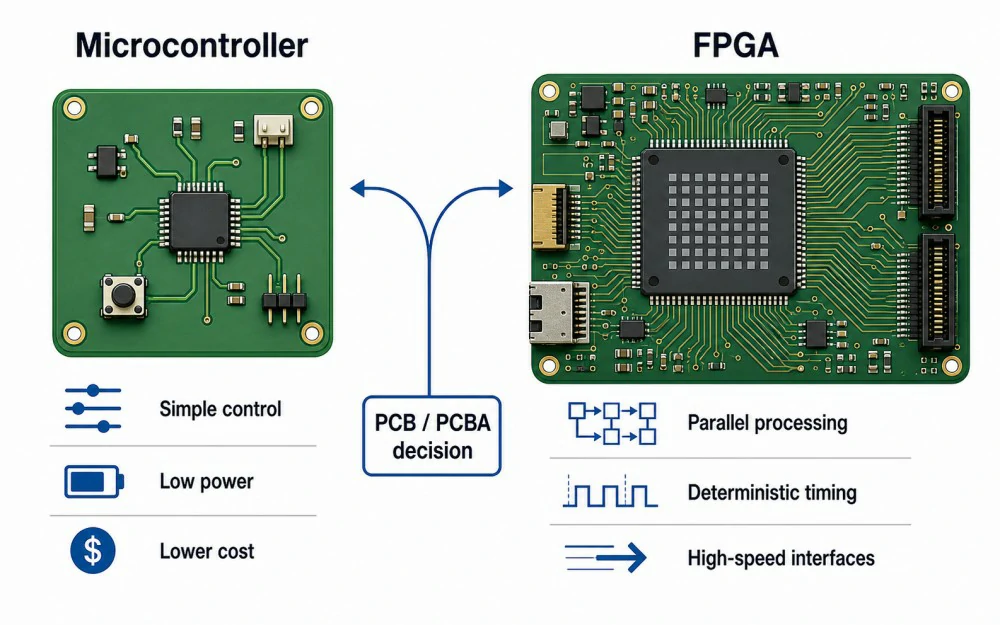
Choose a microcontroller when a product needs simple control, low power, lower cost, and fast firmware development. Choose an FPGA when the design needs parallel processing, deterministic timing, custom digital logic, or many high-speed interfaces.This choice affects PCB layout, layer count, package type, power design, assembly, inspection, testing, cost, and lead time. For PCB and […]
VCC vs VDD vs VSS: Meaning, Difference, and PCB Net Names
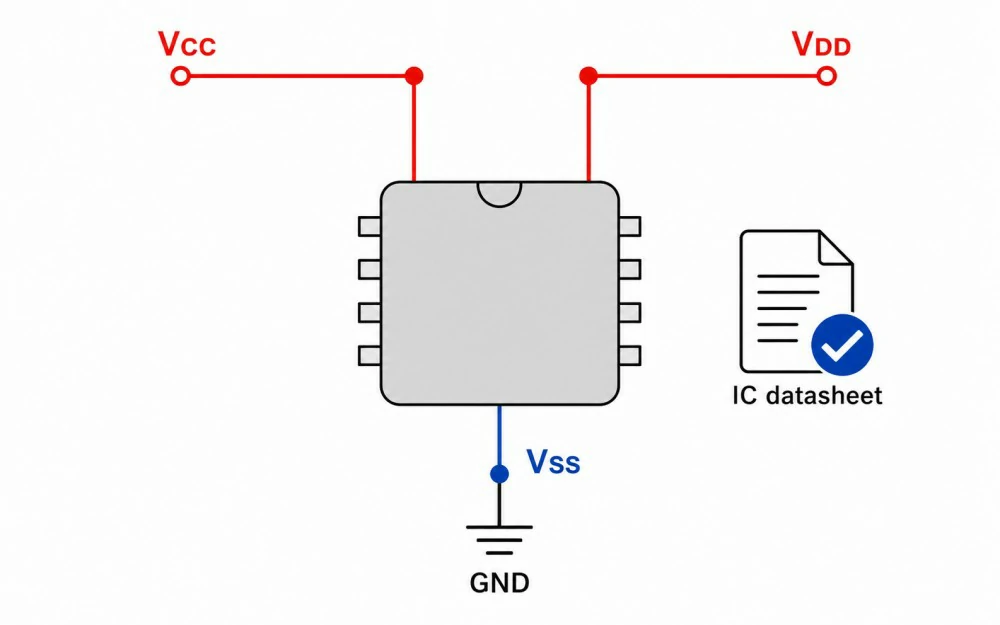
VCC and VDD usually mean the positive power rail. VSS usually means the lower power reference. In many simple CMOS circuits, VSS connects to GND. Do not trust the label by itself. Always check the IC datasheet. Look at the pin table, voltage range, exposed pad notes, and power-up rules before PCB layout. VCC vs […]
Rigid Flex PCB Design Guide: Stackup and DFM
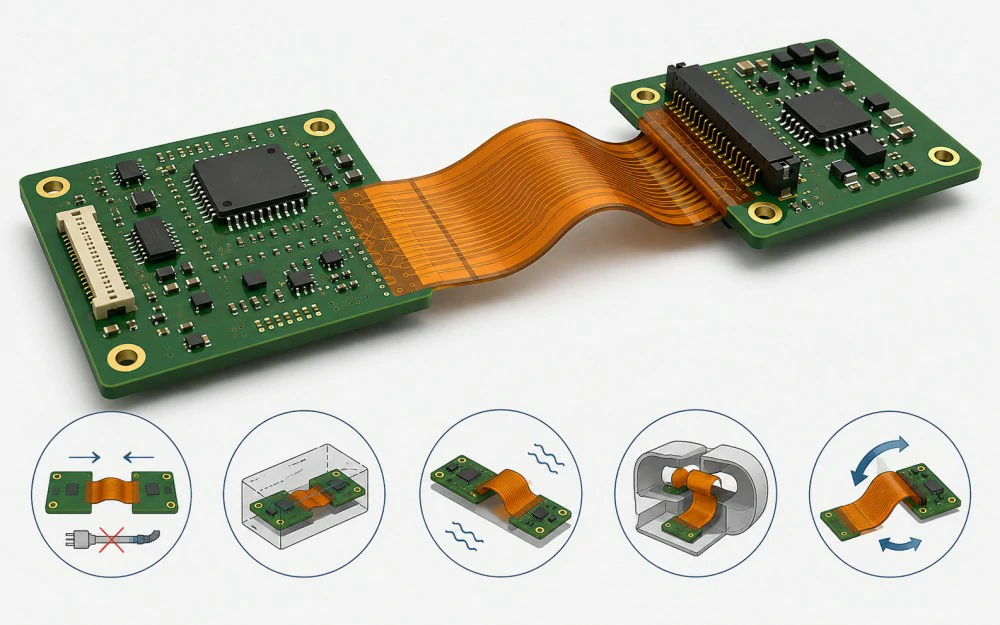
A rigid flex PCB is a packaging and reliability choice, not only a smaller way to connect two boards. Use it when cables, connectors, vibration, folding, or a tight enclosure create real design risk.Rigid-flex can reduce connectors, save space, improve vibration resistance, and support three-dimensional layouts. It also requires early control of the stackup, bend […]
What Is Silkscreen PCB? PCB Legend Rules for Assembly
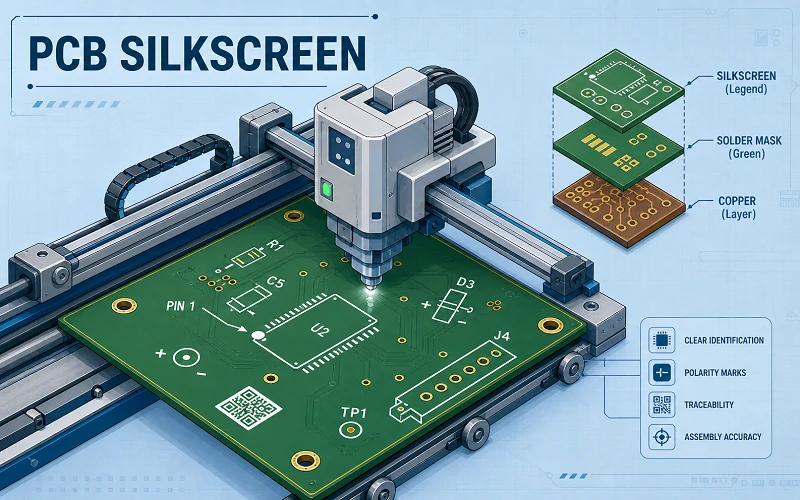
Silkscreen PCB is the printed legend layer that helps people read a circuit board during assembly, testing, repair, and traceability work. It is not just decoration. A clear PCB legend can prevent wrong connectors, reversed diodes, hidden test points, and mixed-up board revisions. PCB silkscreen does not carry current, but it affects how fast a […]
Resistor Values for PCB Design: Tables and Selection Rules
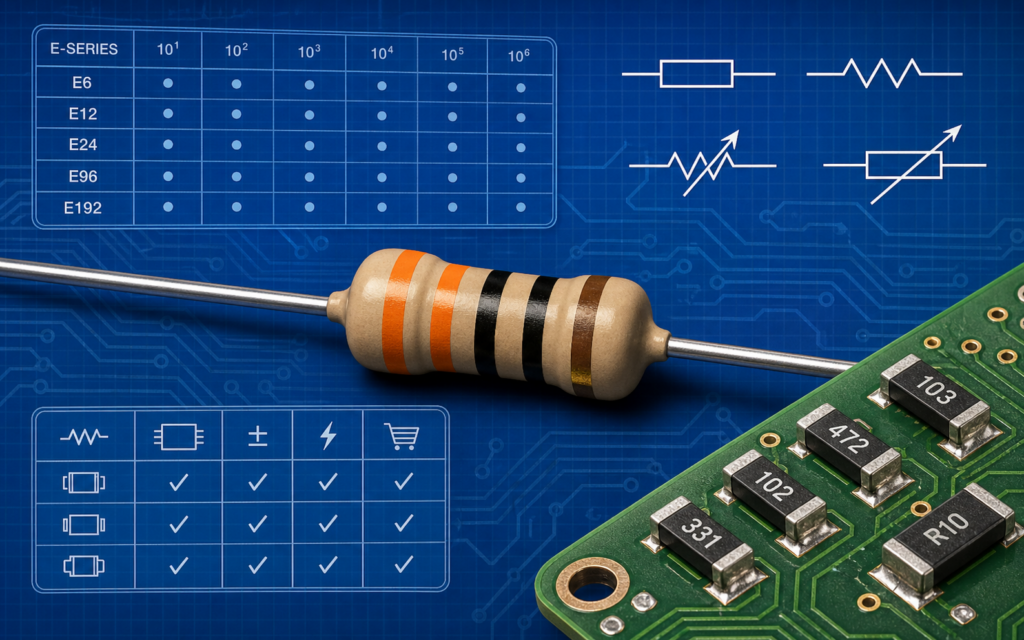
Resistor values affect current, voltage division, signal stability, heat, tolerance error, and long-term sourcing. A 10kΩ resistor may be a good GPIO pull-up, but the same value can be wrong for a precision ADC divider or a high-speed bus. Good resistor selection is not just a calculation. Before a value reaches the BOM, engineers should […]
1.2mm vs 1.6mm PCB Keyboard: Choose the Right Thickness
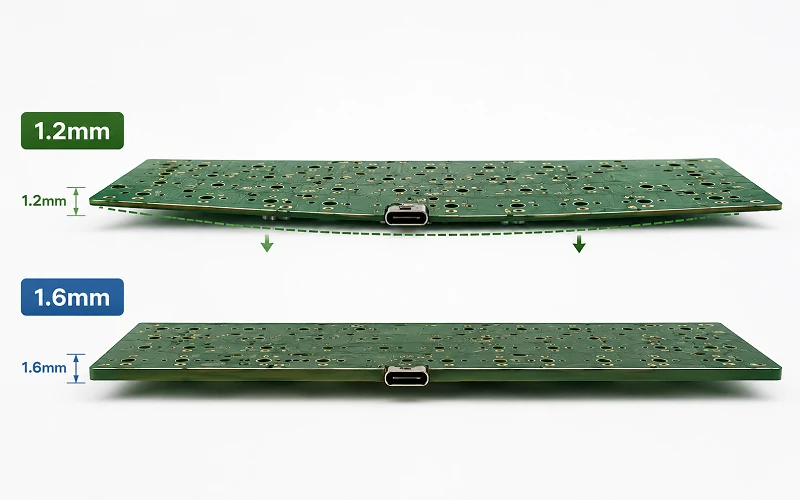
If you compare a 1.2mm vs 1.6mm PCB keyboard, the short answer is simple. Choose 1.2mm if you want more flex and a softer typing feel. Choose 1.6mm if you want stronger support, easier assembly, wider stabilizer support, and lower production risk. PCB thickness affects more than feel. It can change stabilizer fit, hotswap socket […]