
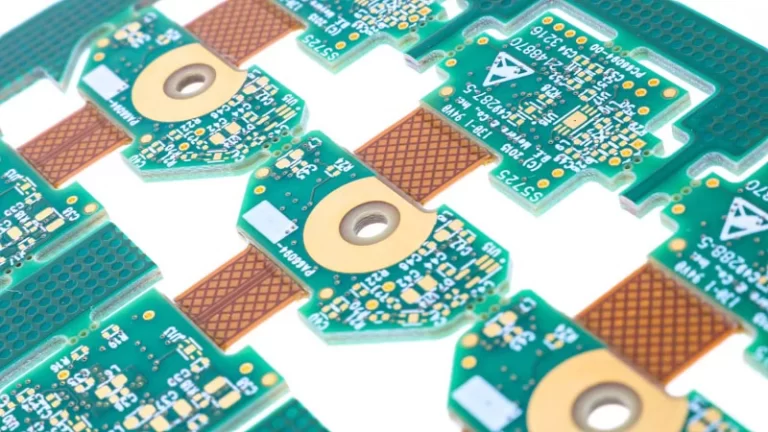
A Silicon Valley autonomous driving startup was developing a next-generation LiDAR (Light Detection and Ranging) system requiring unprecedented integration of high-speed digital, analog, and RF circuitry on a single 14-layer rigid-flex PCB. The system demanded millimeter-wave signal integrity at 77 GHz, tight impedance control (±5% for differential pairs), and extensive functional testing under extreme environmental conditions—all within an aggressive 18-week development timeline.
The client faced three interlocking challenges that threatened their product launch:
Design Complexity – The 14-layer rigid-flex PCB combined high-speed digital (25 Gbps SerDes), precision analog (16-bit ADC), and RF (77 GHz radar) circuits on the same board. Signal isolation, crosstalk mitigation, and impedance matching across mixed technologies required advanced simulation and layout expertise.
Test Rigor – The system required validation across a wide range of operating conditions: temperature cycling (-40°C to +125°C), vibration (20 Grms), and humidity (95% RH non-condensing). Traditional functional testing was insufficient—full parametric characterization was required.
Regulatory Compliance – Automotive-grade certification (AEC-Q100/200) demanded documented traceability for every component and process, with zero defects permissible in safety-critical functions.
With no prior manufacturing experience and a fragmented supply chain of specialized design houses, the client needed a single partner capable of managing the entire NPI lifecycle—from design optimization to certified production.
Weller’s engineering and test teams implemented a comprehensive design-for-test (DFT) and validation framework tailored to the complexity of the LiDAR system:
The integrated design and test approach delivered the performance and reliability required for autonomous vehicle deployment:
Metric
Requirement
Achieved
Impedance Control (Differential)
±10%
±5%
RF Signal Loss @ 77 GHz
<2.5 dB/ft
<1.8 dB/ft
Test Coverage
95%
99.2%
First Pass Yield
>85%
93.7%
Temperature Cycling
500 cycles
1,000 cycles
AEC-Q Compliance
Pending
Certified
The client completed their NPI phase in 16 weeks—two weeks ahead of schedule—and successfully scaled to production volume of 5,000 units per month within the first quarter. The integrated test architecture reduced diagnostic time for field returns by 70%, enabling rapid root cause analysis and continuous improvement.
This project demonstrates that mastering complex design and test requirements requires more than advanced equipment—it demands a deeply integrated approach spanning design optimization, controlled manufacturing, and comprehensive test architecture. By embedding engineering expertise early, developing custom test solutions, and maintaining rigorous process controls, Weller enabled our customer to bring a safety-critical autonomous system to market with confidence.
For OEMs developing high-performance electronics in automotive, aerospace, or telecommunications, an integrated design-to-test partnership is essential to managing complexity without compromising reliability.
Click to download the case study in PDF format.