
Hidden Inner Layer PCB Shorts Caused by Production Panel Compensation

A WellerPCB manufacturing case study on why correct working Gerber data does not always guarantee a defect-free multilayer PCB The central lesson is clear: if a PCB-based product is intended for commercial sale, supplier selection should be based on manufacturing capability, process control, traceability, and quality assurance—not order quantity or price alone. Whether the order […]
CTI in PCB Materials: Beyond FR-4 Selection

In PCB design and manufacturing, engineers usually focus on impedance control, thermal performance, stackup structure, and signal integrity. However, the base material itself determines another critical reliability factor: Comparative Tracking Index (CTI).For high-voltage, automotive, industrial, and safety-critical PCB applications, CTI affects electrical reliability, creepage distance requirements, and certification compliance. This guide explains CTI ratings, IEC […]
What Is In-Circuit Testing (ICT)? Importance for PCB Quality Manufacturing
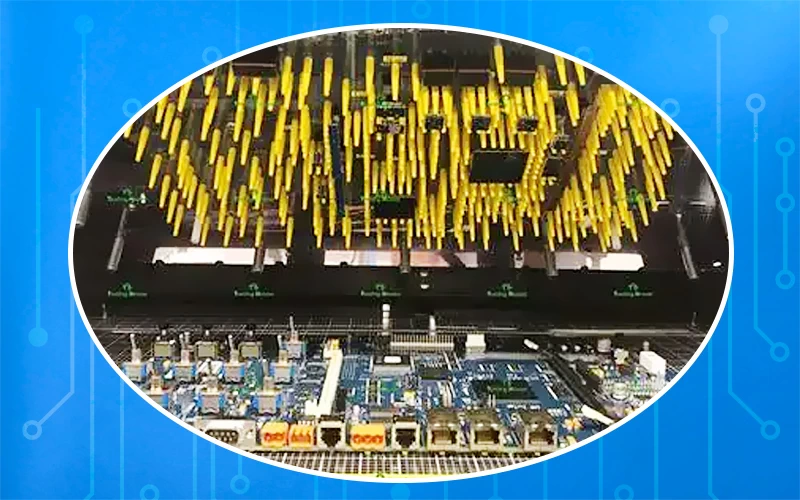
Introduction Before talking about In-Circuit Testing for printed circuit boards. Do you ever wonder how electronic manufacturers use different types of methods to confirm that the printed circuit boards operate correctly prior to delivery at the customer level? Modern electronic devices are rapidly increasing in size and complexity. A minor PCB defect can create a […]
Glass Fiber Weave Effect on High-Speed Differential Pair

The glass fiber weave effect, also known as weave skew, is a critical signal integrity challenge in high-speed PCB design that occurs when differential pair traces experience uneven propagation delays due to dielectric constant variations between fiberglass strands and resin. As data rates climb into multi-gigabit ranges (PCIe Gen 5, USB4, 100G Ethernet), even picosecond-level […]
PCB Thermal Management: Techniques for High-Power & High-Density Designs

Today, with the increasing precision and powerful functionality of electronic devices, the thermal management is becoming more and more important, which normal
How to Design PCBs for Easy Assembly: Avoid Common DFM Mistakes

A good PCB assembly quality determined by multiple-factors, PCB layout and design is a key factor of all of them. This article present some critical factors tha