
IPC J-STD-001 for PCB Assembly and Supplier Control
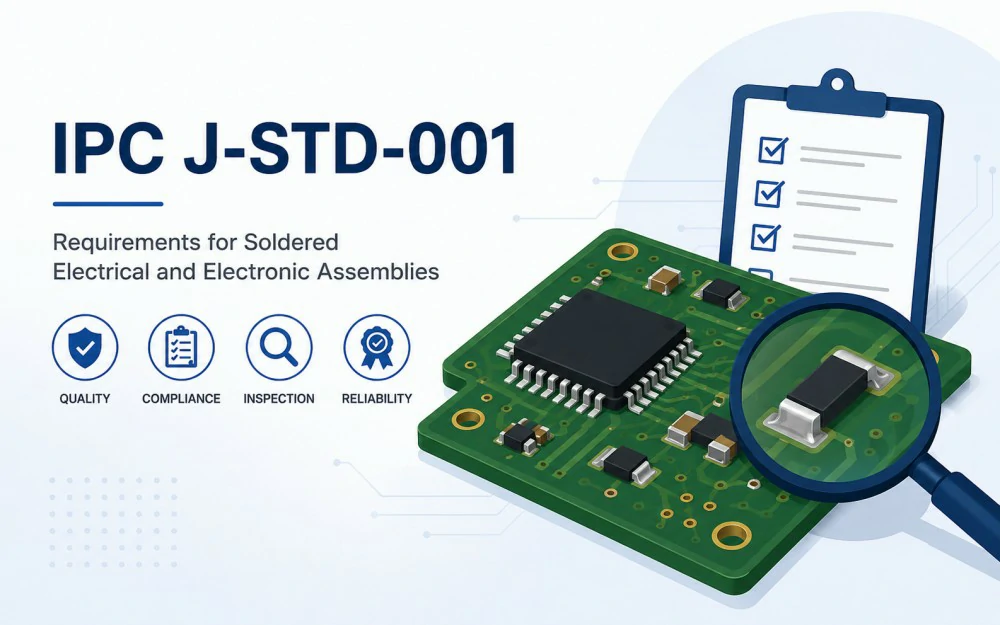
IPC J-STD-001 defines material, process, inspection, and acceptance requirements for soldered electrical and electronic assemblies. It helps OEMs, EMS providers, engineers, and quality teams specify how a PCBA will be built and verified.Writing only “IPC compliant” on an assembly drawing is not enough. A usable manufacturing specification must identify the revision, product class, applicable addendum, […]
PCB Solder Mask Materials: Selection and Design Guide
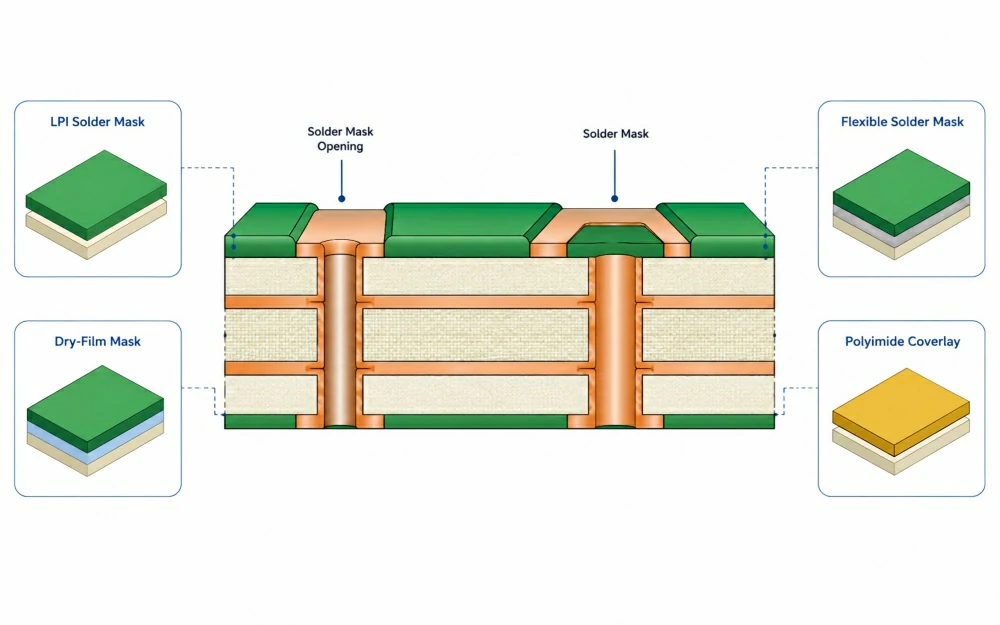
PCB solder mask materials are permanent polymer systems applied over copper to protect the board and control where solder can contact pads. Common options include liquid photoimageable solder mask, dry-film mask, liquid epoxy mask, flexible solder mask, and polyimide coverlay. In general, most production PCBs use liquid photoimageable solder mask, or LPI, because it supports […]
In-Circuit Test vs Flying Probe for a Better PCBA Strategy
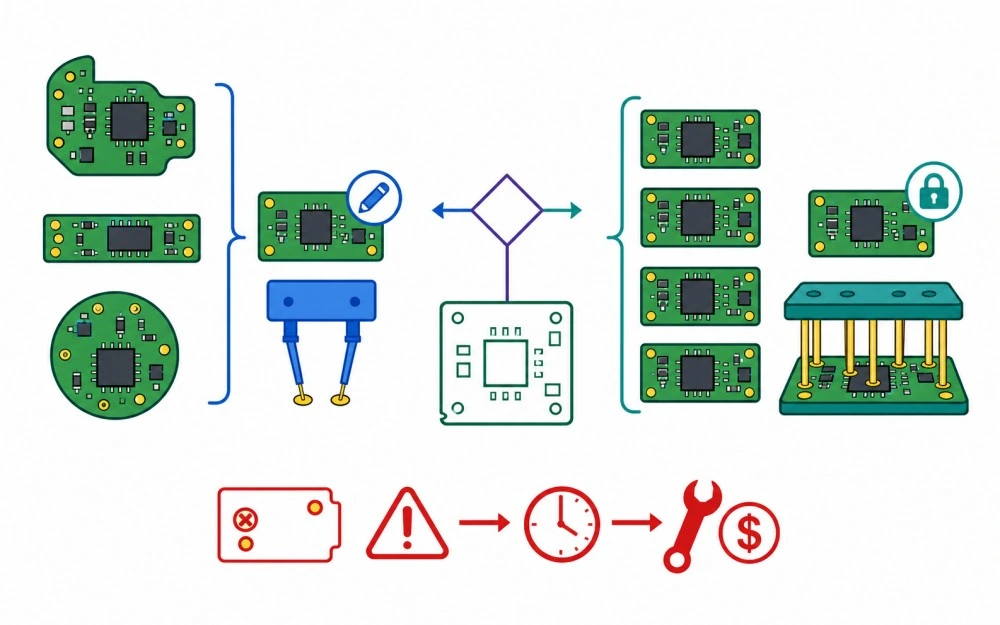
Choose flying probe testing for prototypes, changing designs, and high-mix builds. Choose in-circuit testing (ICT) when the PCB and BOM are stable and recurring volume can justify a custom fixture.Make this decision before layout release. Missing test access can reduce coverage, extend programming time, and increase fixture or redesign costs. In Circuit Test vs Flying […]
How to Read Resistors on PCBs: Codes and Checks
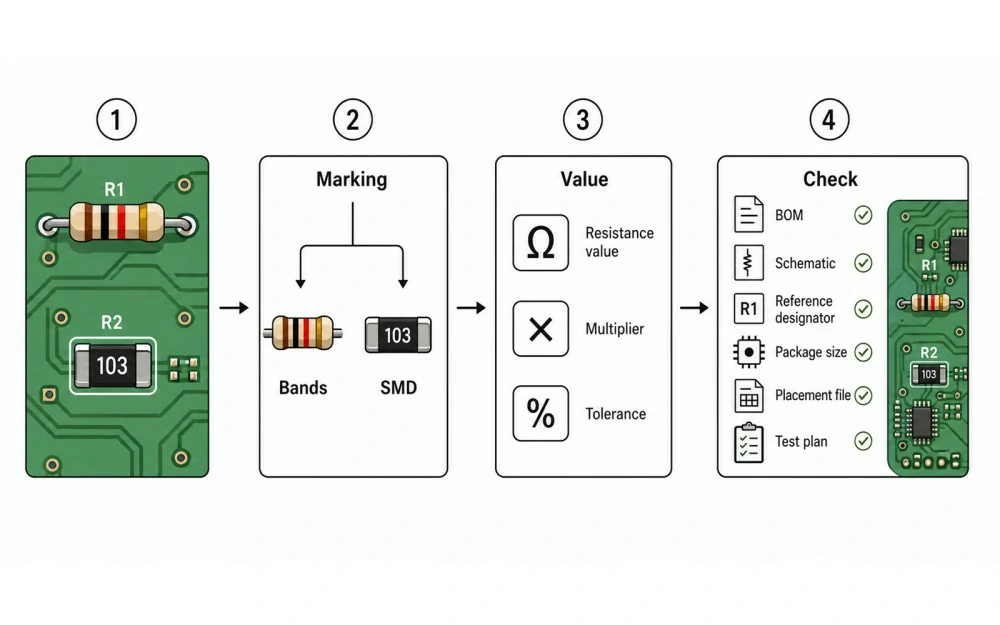
To read a resistor on a PCB, first identify the marking method. Through-hole resistors usually use color bands. SMD resistors usually use numbers, letters, or no visible marking.The marking can show resistance, multiplier, tolerance, and sometimes temperature coefficient. However, PCB assembly teams should also check it against the BOM, schematic, reference designator, package size, placement […]
HDI PCB Design, Manufacturing, Assembly, and Sourcing Guide
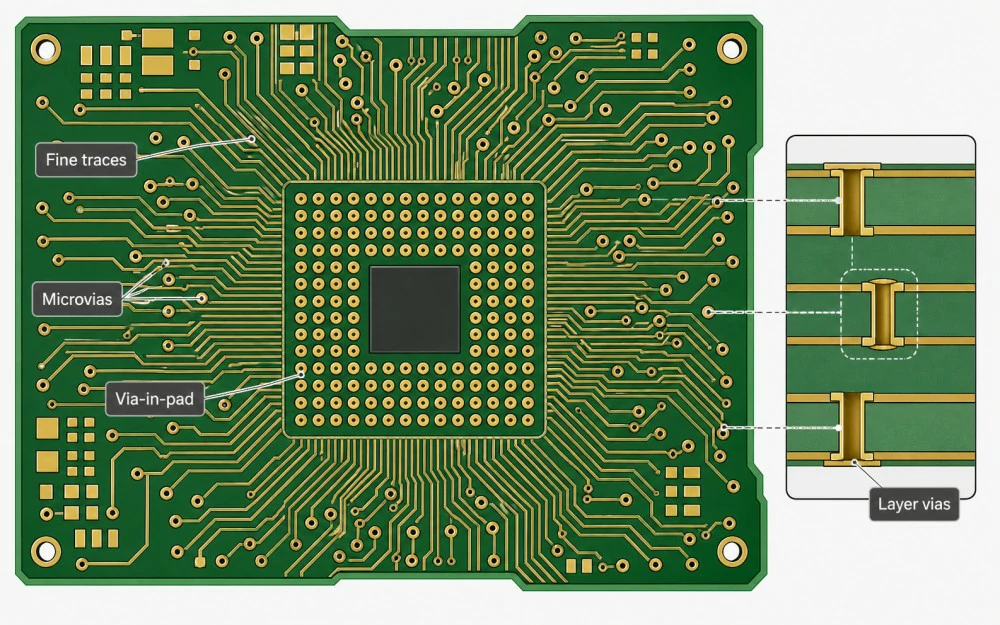
An HDI PCB is a high-density interconnect printed circuit board. It uses finer traces, smaller vias, and denser routing than a standard board. Most designs use microvias, blind vias, buried vias, or via-in-pad structures to connect more signals in less space.Use HDI when a standard multilayer board cannot support your component density, BGA fanout, product […]
FPGA vs Microcontroller for PCB Design and Assembly
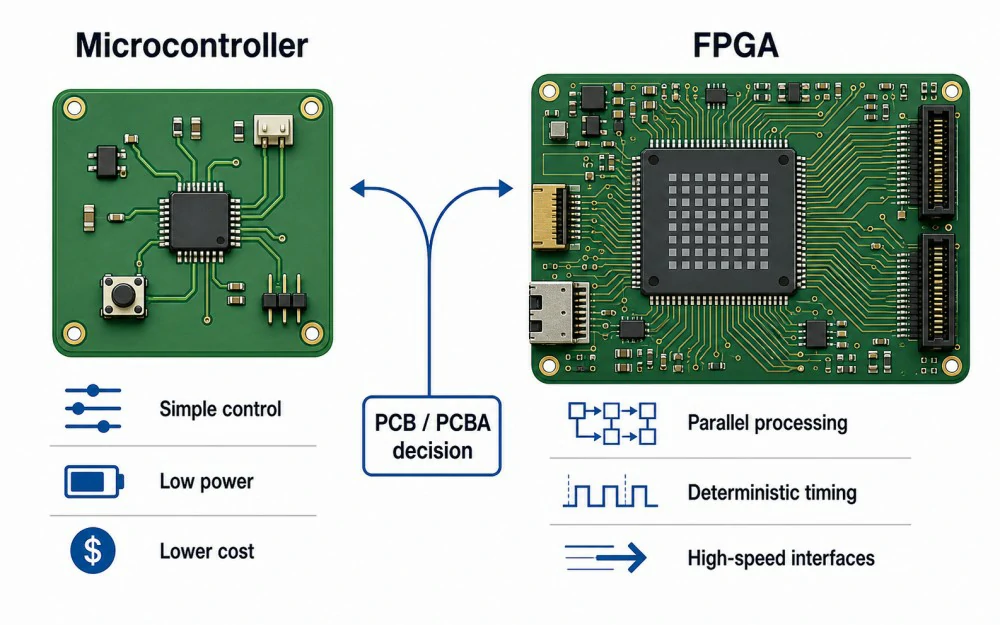
Choose a microcontroller when a product needs simple control, low power, lower cost, and fast firmware development. Choose an FPGA when the design needs parallel processing, deterministic timing, custom digital logic, or many high-speed interfaces.This choice affects PCB layout, layer count, package type, power design, assembly, inspection, testing, cost, and lead time. For PCB and […]