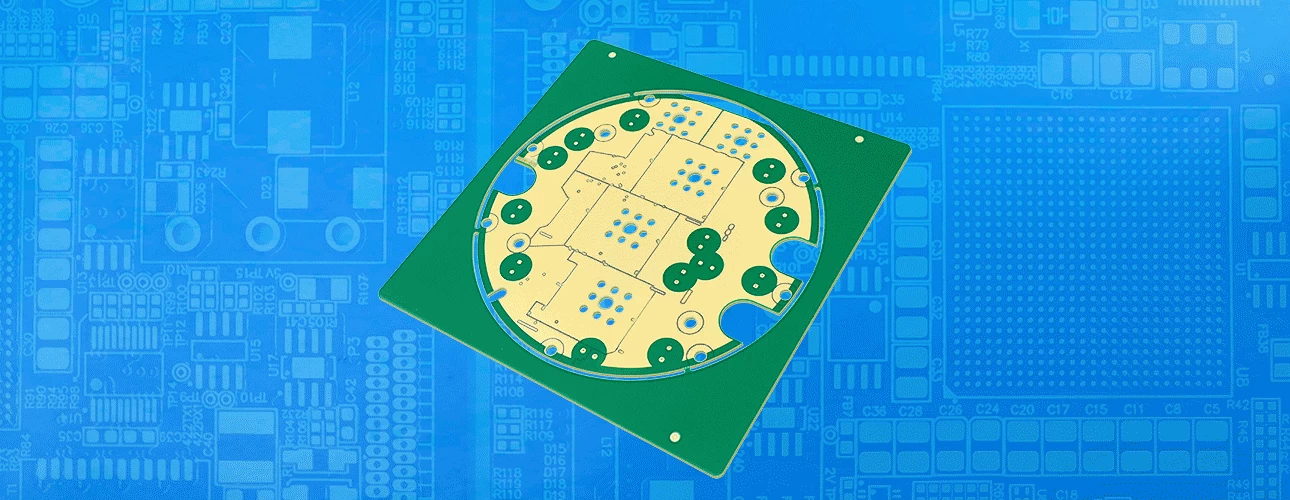
A High Tg PCB uses a laminate with a higher glass transition temperature than standard FR4. It resists heat better. It keeps its dimensions more stable. It also improves reliability during lead-free soldering, rework, thermal cycling, and long-term field operation.
If you design automotive electronics, industrial controllers, telecom equipment, medical devices, LED drivers, robotics systems, or high-power products, you may need more than basic FR4. You may need a high temperature PCB that can survive stronger thermal stress. Weller supports PCB fabrication and PCBA projects where material choice, stackup control, and assembly reliability matter.
This guide explains what High Tg means, when you should use it, which materials you can choose, and how you can evaluate a high-tg PCB manufacturer or high tg pcb supplier.
What Is a High Tg PCB?
A High Tg PCB is a printed circuit board made with a base laminate that has a higher glass transition temperature. Tg means the temperature point where the resin system changes from a hard, glass-like state to a softer, rubber-like state. Below Tg, the board stays more rigid. Above Tg, the resin softens faster, and the PCB expands more.

Standard FR4 usually has a Tg around 130°C to 140°C. Mid Tg FR4 often reaches 150°C to 170°C. High Tg FR4 PCB materials usually start at 170°C. Some advanced laminates exceed 180°C. A higher Tg value gives the PCB better thermal stability, stronger dimensional control, and better resistance to warpage, delamination, and plated through-hole stress.
Material Type
Typical Tg Range
Common Use
Standard FR4
130–140°C
Simple consumer electronics
Mid Tg FR4
150–170°C
General industrial electronics
High Tg FR4
170–180°C
Automotive, power, telecom, industrial control
Ultra High Tg Material
180°C+
Aerospace, EV, defense, harsh environments
High Temperature PCB: Why Tg Matters
A high temperature PCB must survive more than normal operating heat. It must also survive fabrication, assembly, reflow soldering, repair, storage, and field use. Lead-free soldering often exposes the board to peak reflow temperatures around 240°C to 260°C. That peak is much higher than the daily working temperature of many products.
When Tg is too low, the board can expand more during reflow. This expansion stresses copper barrels, pads, vias, and inner layers. In a simple two-layer board, the risk may be manageable. In a dense multilayer board, thick copper board, BGA assembly, or HDI product, the same stress becomes more serious.
Tg vs Td vs CTE vs Dk vs Df
You should not choose high tg pcb material by Tg alone. Tg shows when the resin starts to soften. Td shows when the material starts to decompose. CTE shows how much the board expands under heat. Dk affects impedance and signal speed. Df affects signal loss. Moisture absorption affects delamination and CAF risk.
Property
Meaning
Why It Matters
Tg
Glass transition temperature
Shows resin softening behavior
Td
Decomposition temperature
Shows thermal damage limit
CTE
Coefficient of thermal expansion
Affects via reliability and flatness
Dk
Dielectric constant
Affects impedance and signal speed
Df
Dissipation factor
Affects high-frequency signal loss
Moisture Absorption
Water uptake
Affects delamination and CAF resistance
If you design high-speed digital, RF, or controlled impedance boards, you must compare Dk and Df as carefully as Tg. A high frequency pcb high tg material must combine thermal stability with stable dielectric behavior.
For thermal layout planning, you can also review this PCB thermal design guide for high-power electronics.
High Tg FR4 PCB vs Standard FR4 PCB
High Tg FR4 PCB gives you a wider reliability margin than standard FR4. Standard FR4 costs less and works well for low-power, low-risk products. High Tg FR4 costs more, but it performs better in boards that face heat, repeated soldering, dense routing, or long service life requirements.
| Item | Standard FR4 | High Tg FR4 PCB |
|---|---|---|
| Tg Value | 130–140°C | 170–180°C |
| Thermal Stability | Moderate | Higher |
| Lead-Free Assembly | Suitable for simple boards | Better for complex boards |
| Warpage Control | Lower | Better |
| Via Reliability | Moderate | Stronger |
| Cost | Lower | Higher |
| Best Fit | Basic electronics | Industrial, automotive, telecom, power electronics |
High Tg is not always necessary. You should use it when the reliability gain is worth the added cost. In many industrial and automotive products, the extra laminate cost is small compared with the cost of field failure.
High Tg PCB Materials in PCB Manufacturing
Choosing the right high tg pcb material is one of the most important decisions in PCB design. A higher Tg improves thermal stability, but the final material choice should also reflect layer count, assembly temperature, signal speed, moisture exposure, copper weight, and cost target.
Rigid PCB High Tg Material Options
Most rigid PCB high Tg material options include High Tg FR4, enhanced epoxy laminates, polyimide materials, and specialized RF or high-speed laminates. High Tg FR4 remains the most common choice because it balances cost, availability, manufacturability, and reliability.
Multi-Layer PCB High Tg Material Selection
For multi-layer PCB high Tg material selection, engineers often prefer laminates with lower Z-axis expansion and better dimensional stability. High layer-count boards experience stronger stress during lamination and lead-free reflow. Better material control can reduce layer shift, via fatigue, and barrel cracking.
Material
Typical Tg
Relative Cost
Main Application
Key Advantage
High Tg FR4
170–180°C
Medium
Industrial, LED, power electronics
Balanced cost and reliability
Polyimide
250–300°C+
Very High
Aerospace, defense, harsh environments
Excellent thermal cycling
For most electronics products, High Tg FR4 between 170°C and 180°C gives the best balance. For RF and high-speed systems, dielectric performance may matter more than Tg alone. For aerospace and extreme environments, polyimide may be a better choice.
Benefits and Common Failures Prevented by High Tg PCB
The main benefit of High Tg PCB is not only better heat resistance. It also reduces several failure risks that appear during assembly and field use.
Delamination and Resin Degradation
Delamination occurs when internal layers separate. Heat, moisture, poor storage, and weak material selection can increase this risk. High Tg materials give the board a stronger thermal margin and reduce resin softening during high-temperature processes.
Warpage and Dimensional Movement
Warpage affects SMT yield, BGA soldering, connector fit, and mechanical assembly. High Tg laminates improve dimensional stability, especially when the stackup is symmetrical and copper distribution is balanced.
Barrel Cracking and CAF Risk
Plated through holes suffer when the board expands and contracts. A better Tg and lower CTE material can reduce stress on copper barrels. Conductive anodic filament risk also drops when the material, spacing, drilling, cleaning, and moisture control are handled correctly.
Automotive Grade High-Tg PCB and Other Applications
Automotive grade high-tg PCB solutions are widely used in engine control units, EV battery management systems, ADAS modules, LED headlight drivers, onboard chargers, and power control systems. These boards face heat, cold starts, vibration, humidity, and long service life requirements.
High Tg PCB also supports industrial automation, power supplies, inverters, telecom base stations, networking equipment, medical devices, aerospace electronics, robotics controllers, IoT gateways, and outdoor LED lighting systems. These products often combine heat, dense assembly, high current, or environmental stress.
A high temperature PCB is especially useful in motor drives, power conversion systems, charging equipment, renewable energy devices, and LED drivers. For humid or outdoor environments, material selection should also include moisture resistance. This guide on temperature and humidity effects on PCB reliability explains how heat and moisture can affect long-term PCB performance.
HDI, High Tg Multilayer PCB, and Design Considerations
High Tg multilayer PCB designs need careful stackup planning. More layers create more lamination stress. Dense BGA routing, heavy copper, blind vias, buried vias, and controlled impedance traces increase the need for stable materials.
HDI boards use smaller vias, finer lines, thinner dielectrics, and tighter registration. High Tg materials can improve stability during lamination and lead-free reflow. If your design includes microvias, DDR, PCIe, Ethernet, RF signals, or fine-pitch packages, you should review Tg, CTE, Dk, Df, copper roughness, resin content, and via structure early.
A high tg pcb prototype helps your team verify the design before production. You can test soldering quality, impedance, board flatness, via reliability, and thermal behavior. For advanced HDI routing and stackup planning, review this any-layer HDI PCB manufacturing guide.
Manufacturing Considerations and IPC Standards

A good design still needs a controlled manufacturing process. High Tg materials can require more careful lamination, drilling, desmear, plating, baking, and inspection than standard FR4. Poor process control can still cause voids, layer shift, smear, rough hole walls, weak copper plating, and bow or twist.
IPC standards help buyers define quality expectations. IPC-4101 covers base materials for rigid and multilayer PCBs. IPC-6012 defines performance requirements for rigid printed boards. IPC-A-600 defines printed board acceptability. IPC-TM-650 includes test methods for material and reliability evaluation. RoHS compliance also matters because lead-free assembly usually increases process temperature.
How to Choose a High Tg PCB Supplier and Manufacturer
Choosing a qualified high-tg PCB manufacturer is as important as choosing the right material. A capable manufacturer should understand lamination behavior, drilling limits, plating reliability, impedance control, HDI process flow, and lead-free assembly.
A reliable high tg pcb supplier should offer multiple laminate options, including High Tg FR4, polyimide, and high-frequency materials. The supplier should also provide DFM feedback, stackup review, material recommendations, prototype support, and production capability.
When you evaluate a high glass transition PCB manufacturer, ask whether the company can support controlled impedance, HDI boards, multilayer stackups, IPC requirements, PCBA assembly, and material traceability. You should also ask how the factory controls lamination, drilling, plating, baking, and inspection.
Why Choose Weller PCB
Weller PCB Board Manufacturer supports engineers, hardware teams, sourcing managers, OEMs, and ODM manufacturers with PCB fabrication and PCB assembly services. You can work with the team on High Tg PCB, multilayer PCB, HDI PCB, controlled impedance boards, prototypes, and production runs.
To avoid quality anomalies such as delamination during the PCB assembly process through reflow soldering, WELLER’s default standard is as follows: 4-layer PCBs (including standard 6-layer boards) shall use TG150 base material; 8-layer and above boards (including special 6-layer boards) shall use TG170 base material. This standard is adopted by our company based on industry practices, with priority given to operational considerations in Shenzhen over specific customer requests.
If you are not sure which Tg value fits your project, you can send Gerber files, stackup, BOM, operating temperature, copper weight, impedance requirements, and assembly needs. The engineering team can review your design and suggest a practical material option. If your project needs fast pricing, you can request instant quotes for PCBA solutions.
FAQ
1. Is High Tg PCB necessary for lead-free assembly?
High Tg PCB is strongly recommended for many lead-free assemblies. Lead-free soldering uses higher reflow temperatures, so stronger materials reduce warpage, delamination, and via stress.
2. What is the difference between Tg and Td?
Tg shows when resin begins to soften. Td shows when the material starts to decompose. Tg affects stability, while Td defines the material’s higher thermal damage limit.
3. Does High Tg PCB reduce warpage?
Yes. High Tg PCB materials usually provide better dimensional stability. They reduce deformation during heating, especially in multilayer boards, BGA designs, and dense SMT assemblies.
4. Can High Tg PCB improve via reliability?
Yes. High Tg materials with better expansion behavior can reduce stress on plated through holes, especially in thick, multilayer, and thermally cycled boards.
5. Does High Tg PCB affect signal integrity?
High Tg alone does not guarantee better signal integrity. You must also compare Dk, Df, stackup geometry, copper roughness, and impedance control.